Cases, packs and single units: define stock before splitting it across channels
SW
SinoWarehousing Ops Team China warehouse operations
Updated Oct 12, 2026
3 min read
TL;DR · 30 seconds
How to document stock units, conversion factors and reservations before allocating a China SKU to marketplaces and DTC.
OPERATING NOTES · 6 OCTOBER 2026
Cases, packs and single units: define stock before splitting it across channels
A quantity such as “100 units” is incomplete when the stock can be sold as cases, retail packs or finished kits. Define the physical counting unit and its conversion first, then record what remains sealed, what has been opened and what is reserved. This keeps a channel allocation connected to the stock that can actually be prepared.
Prepared by SinoWarehousing · Practical records with linked platform guidance.
Name the unit at each stock level
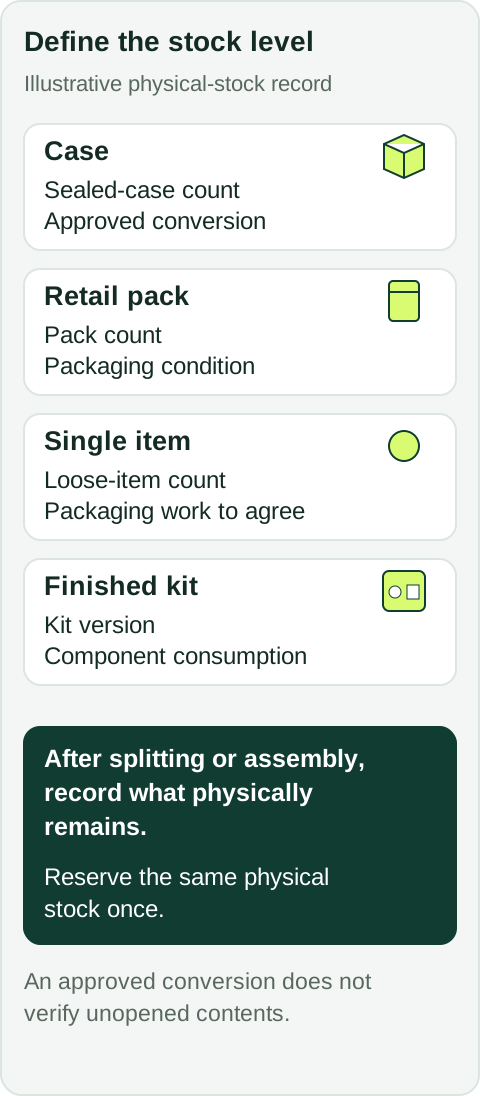
Illustrative stock record. Define sealed cases, retail packs, loose single items and finished kits separately. Keep the approved conversion, physical packaging and component consumption with each movement. Record what remains after splitting or assembly, and reserve the same physical stock once.
Give a case, retail pack and single item distinct descriptions. Record the approved conversion, product variant and packaging version. If a supplier expects ten packs per case but receiving has only verified sealed cartons, keep the expected pack total separate from the counted quantity.
Stock level
Example definition
Record to keep
Case
One sealed case containing 10 retail packs
Sealed-case count and approved pack conversion
Retail pack
One sellable pack containing 2 individual items
Pack count, packaging condition and sales mapping
Single item
One item removed from a retail pack
Loose-item count and any new packaging instruction
Finished kit
An assembled set with the specified components
Kit version, completed quantity and component consumption
Record the physical configuration after splitting
Illustrative example: ten verified sealed cases contain ten packs each, giving 100 packs. If ten packs are released from one whole case, the remainder is nine sealed cases. If five packs are taken from each of two cases, the remainder is eight sealed cases plus ten loose packs. Both remainders total 90 packs; their preparation requirements differ.
Keep the opened-case references, loose-pack quantity and any observed packaging issue with the movement. Do not describe loose packs as sealed cases merely because the arithmetic converts evenly. A quantity equivalence does not establish the physical packaging available for the next order.
Check component limits before offering a bundle
Shopify’s bundle guidance calculates availability from the limiting component: divide each component’s available inventory by the quantity needed per bundle, round down, then use the smallest result. The guidance also explains how inventory tracking and selling beyond available stock can affect the calculation.
Illustrative example: a kit requires two items of A and one of B. With 15 available A and six available B, the component calculation permits six kits. Confirm what “available” means in the seller’s configuration and whether the physical components have been checked. This platform calculation is separate from an instruction to assemble or dispatch kits.
Reserve once and record assembly consumption
For each channel allocation, keep a reservation reference, quantity basis, intended destination and approving person. If finished kits have been assembled, record the components consumed and the finished-kit quantity together. Counting both the consumed components and the completed kits as freely available would duplicate the same physical stock.
A Shopify component figure does not confirm that Walmart, TikTok Shop or another channel has received the same reservation. Agree how channel allocations are handed over and how changes are acknowledged before stock is promised to another destination.
Close each movement with a usable balance
Retain the released quantity, sealed cases remaining, loose packs or items remaining, assembled kits and unresolved counts. Identify reservations still active and any packing work required before the next release.
For a China stock discussion, send the case contents, retail-pack definition, approximate quantity and intended channel allocation. Confirm the count and handling scope for the actual goods before using a supplier’s conversion as a verified release balance.
Sources and scope
Sources checked 6 October 2026. Recheck the current seller program and account instructions before acting.
The count sheet and examples are proposed warehouse controls with fictional quantities. The Shopify reference concerns component-based bundle availability in Shopify; it does not establish synchronization with another marketplace or a warehouse system.
Share the product, quantity basis, current location, destination and requested work. Receiving addresses, handling scope and charges require acceptance for the actual shipment.